Unit Testing 3
1. Combinatorial Testing
Combinatorial testing addresses the challenge that program behavior is often affected by many interacting factors, such as input parameters, environment configurations (global variables), and state variables.
- Motivation: It is often impractical to test every possible combination of values. For example, a font dialog box with 10 effects would require $2^{10}$ (1,024) tests for just those settings, which becomes overwhelming when combined with other parameters like font type and size.
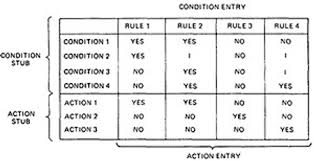
- Decision Table-Based Testing (DTT):
- Applicability: Best for requirements involving complex conditional actions.
- Structure: Consists of Conditions (inputs), Actions (outputs), and Rules (individual test situations/columns).
- Guidelines: Rules must be complete (all combinations present) and consistent (no conflicting actions for the same condition set).
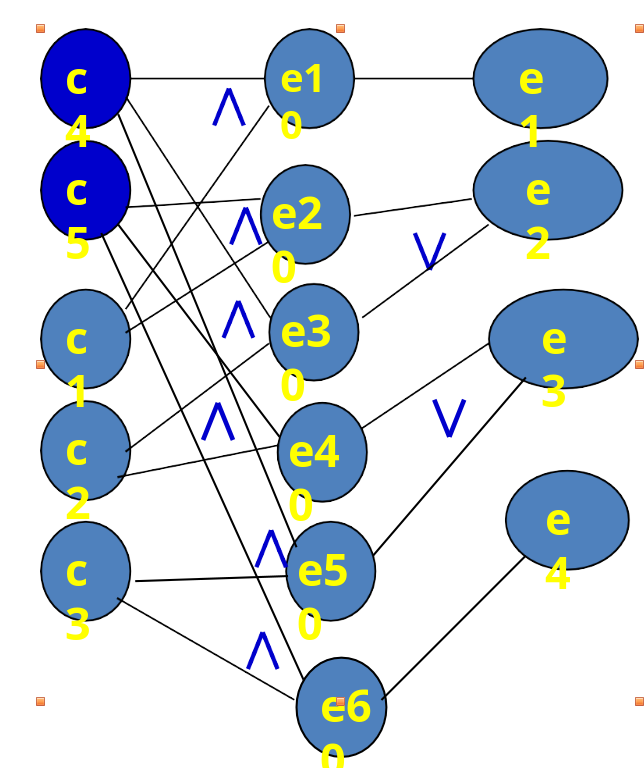
- Cause-Effect Graphs: These graphs represent the logical relationship between specific input combinations (causes) and their resulting outputs (effects). They include constraints and intermediate nodes to link causes to effects.
- Pair-wise Testing (2-Way Combinatorial):
- Principle: Every possible pair of input parameter values must occur at least once in the test suite.
- Rationale: Most software defects are caused by the interaction of two parameters rather than three or more simultaneously.
- Benefit: Dramatically reduces the number of test cases while remaining highly effective at fault detection.
- Fault Models:
- Single-mode: Bug occurs regardless of other settings (e.g., a print option always fails).
- Double-mode: Bug occurs only when two specific options are combined.
- Multi-mode: Bug requires three or more settings to trigger.
2. White-Box Testing (Structural Testing)
White-box testing designs test cases based on the internal code structure of the program.
- Complementary Nature: White-box testing can find "extra" functionality not in the spec or uncover unreachable code, whereas black-box testing ensures the program matches the specification.
- Testing Strategies:
- Coverage-based: Designing cases to execute specific program elements (e.g., every statement).
- Fault-based: Designing cases to expose specific categories of faults (e.g., mutation testing).
3. Types of Program Element Coverage
Week 11 details several "adequacy criteria" used to measure how thoroughly a program is tested:
- Statement Coverage:
- Goal: Every statement in the program is executed at least once.
- Rationale: An error in a statement cannot be found unless that statement is executed.
- Branch (Decision) Coverage:
- Goal: Each branch (True and False outcomes of every decision) is executed at least once.
- Strength: Branch coverage is stronger than statement coverage because traversing every edge in a control flow graph ensures every node (statement) is visited.
- Condition Coverage:
- Basic Condition Testing (BCT): Every basic Boolean condition in a decision statement must evaluate to both True and False at least once.
- Issue: BCT does not necessarily imply branch coverage. For example, in an
ORstatement, if the first condition is True, the second may never be evaluated due to short-circuit evaluation.
- Multiple Condition Coverage (MCC):
- Goal: All possible combinations of truth values for atomic conditions are tested.
- Drawback: It is exponential ($2^n$) and only practical if the number of conditions ($n$) is very small.
4. Subsumption Hierarchy
Testing techniques can be ranked by their relative "strength," where a stronger technique covers all elements of a weaker one plus more:
- Multiple Condition (Strongest)
- Condition/Decision
- Decision (Branch)
- Statement
-
Basic Condition (Weakest)
-
Combinatorial Testing (Decision-Table, Cause-Effect Graph, Pairwise Programming)
- White Box Testing (Coverage based and Fault based)